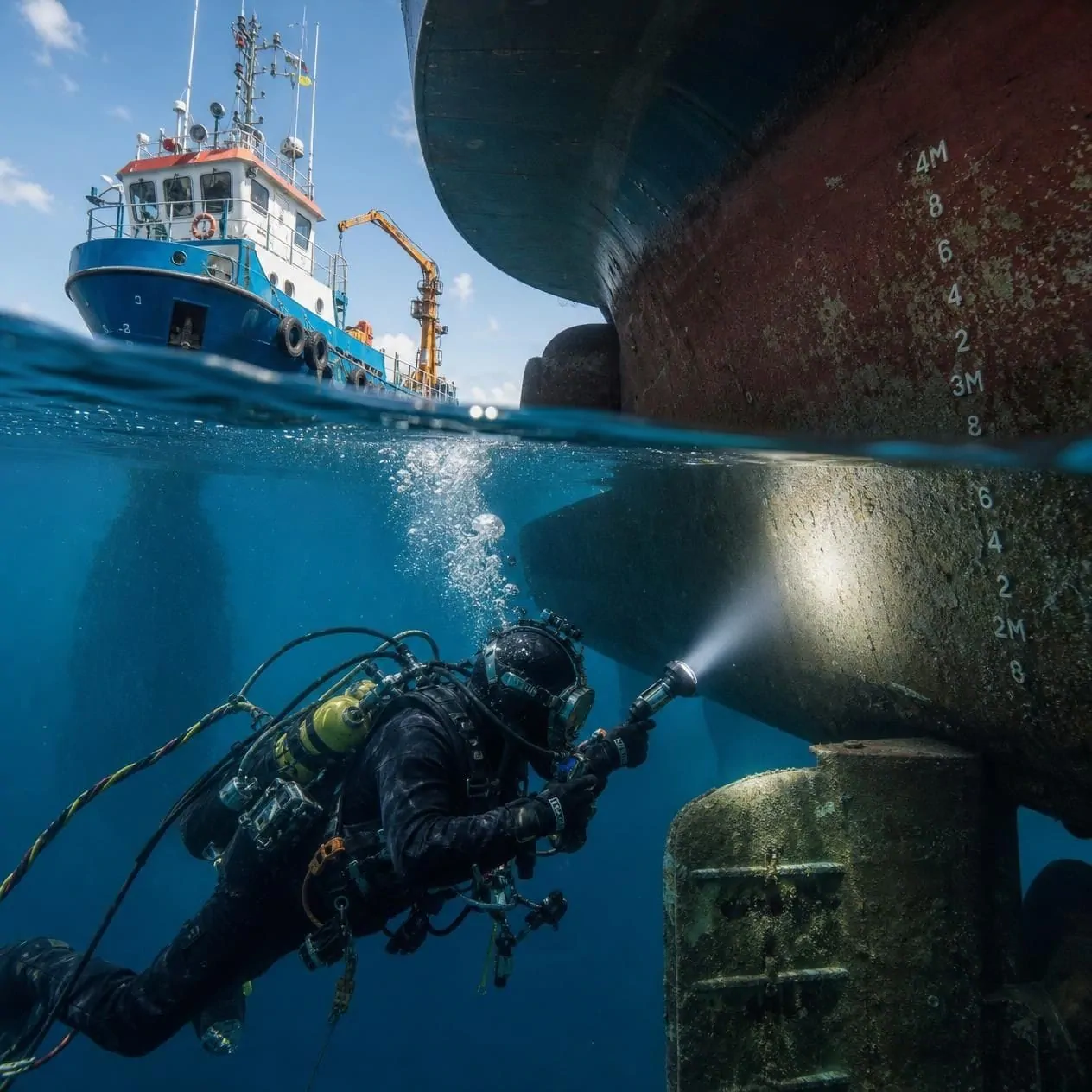
In water class survey.
In-water class survey (IWS) is an underwater inspection of a vessel carried out while the vessel remains afloat, as an alternative to a conventional dry-docking inspection when permitted by the vessel’s classification society.
Main purposes:
Inspect the underwater hull and shell plating for damage, corrosion, or deformation.
Examine propeller, rudder, stern gear, thrusters, sea chests, and other underwater fittings.
Check the condition of anodes and protective coatings.
Identify defects that may require repair or further investigation.
Provide underwater photographs and video as evidence of the vessel’s condition.
How it is carried out:
A class-approved surveyor supervises the inspection.
Qualified divers or an ROV (Remotely Operated Vehicle) carry out the underwater examination.
Real-time video and photographs are normally provided to the surveyor.
The surveyor records findings and determines whether the vessel meets the applicable class requirements.
Benefits:
Avoids or postpones dry-docking where permitted.
Reduces downtime and associated costs.
Allows the vessel to remain afloat and operational.
Provides an effective assessment of underwater condition.
In short: An in-water class survey is a class-approved underwater inspection performed while the vessel is afloat, verifying the condition of the hull and underwater machinery without requiring the vessel to enter dry dock.